
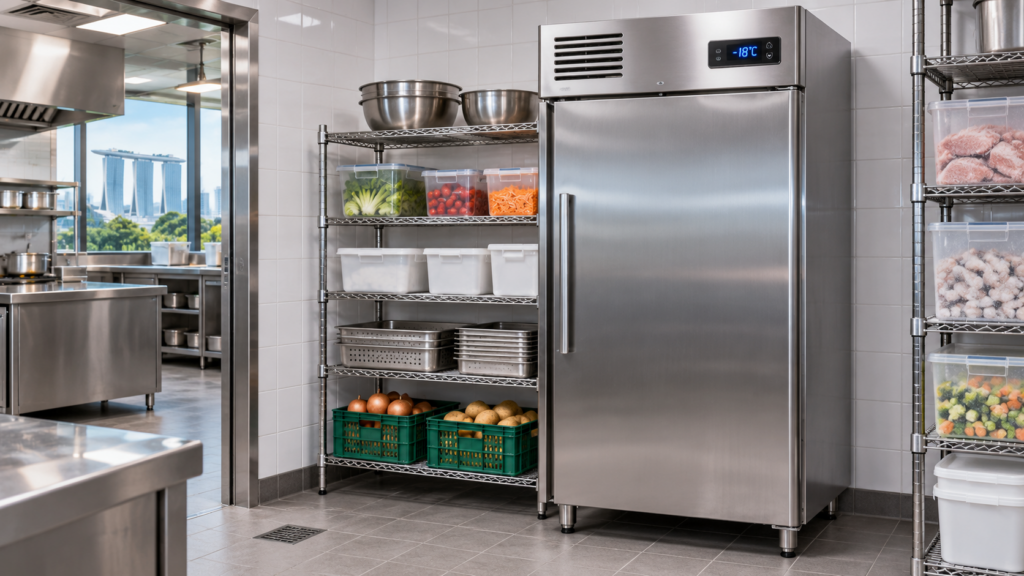
A freezer alarm has to reach someone who can act. In a Singapore restaurant with a closed prep room and rotating duty managers, an audible signal at the cabinet may be useful during service and ineffective after the last shift leaves. Before ordering, decide how your team will receive a warning, what the duty manager must check and what changes when the cabinet is out of sight. Carry those decisions into the delivery acceptance record.
Map who hears and acts
Walk the operating day from goods receiving to close. Identify when someone is near the freezer, when the room is empty and who carries the duty phone overnight. Write down a primary responder and a backup. Use a role as well as a name, so the process still works during leave or shift changes. Specify how a responder acknowledges receipt and who takes over if there is no acknowledgement within the period set by your operating plan.
Distinguish an observation at the cabinet from an alert received elsewhere. A local display, audible warning and separately monitored notification serve different purposes. Ask the supplier what the quoted unit actually includes and whether any remote notification depends on another device, contract or connection. Keep future add-ons out of your definition of what the unit can do on day one unless they are part of the quoted scope.
Specify the acceptance checks
Ask the supplier to explain the warning conditions, configurable settings and dependencies for the proposed model. Record which controls your staff may operate and what needs a service technician. Ask for the manufacturer-supported method for demonstrating a warning. Arrange the test before placing stock in the freezer, coordinate with the installer and keep the test within the model’s instructions. The objective is to check the route the warning takes through your organisation without risking food or substituting a trial for equipment commissioning.
Test a warning from end to end
Write one line per event you expect the system to handle. Capture the event, the notification route, the receiving role, the expected response, the actual time and the evidence you retained. For a local warning, have a team member stand at their normal work position and confirm whether the signal can be seen or heard. For a monitored route, ask the responsible party to demonstrate that the right recipient sees the correct equipment identity. Record who received it and what that person did.
Agree how an interrupted connection or a changed duty contact is handled if the configuration depends on external notification. Ask the responsible supplier to demonstrate supported checks and record limitations. Make an explicit decision on whether a separate monitoring arrangement is necessary. That question can change the quote even if the freezer footprint stays the same.
Keep alarm records and food decisions separate
The Singapore Food Agency advises verifying the accuracy of temperature monitoring equipment. Ask who verifies the relevant display or monitoring device and retain that record. An alert indicates that someone needs to investigate. Use your food safety procedure and your available temperature evidence to decide what happens to stock. Keep the time of any response, observations and the person authorised to decide food disposition in the incident record.
If the supplier and an external monitoring installer are both involved, name the owner of each action. One party may explain the freezer controller while the other checks the notification route. Your duty manager owns the operational response. Ask both parties how the settings and contacts are documented and handed over so later staff changes can be made under the right procedure.
Frequently asked questions
Can I use the display reading as proof that the whole response chain works?
Use the display to observe the cabinet and run a separate supported test of the intended alert route. The receiving person needs to recognise the affected unit and carry out the agreed response. Confirm the display’s accuracy separately under the appropriate procedure.
What should happen if the notification depends on the site network?
Have the responsible installer identify and document that dependency before acceptance. Agree how staff will check whether the notification route is available and who owns restoration. Keep the site procedure workable when the usual recipient or connection is unavailable.
Put the alarm scope in your freezer enquiry
See the U-Save freezer supplier page and share your freezer alarm handover requirements. Include the location of the cabinet, staffed hours and response roles. Ask U-Save to identify the proposed model documentation, the warnings included in the quotation and who can demonstrate each promised function. Keep any external monitoring work visible as a separate line so responsibility is clear.