
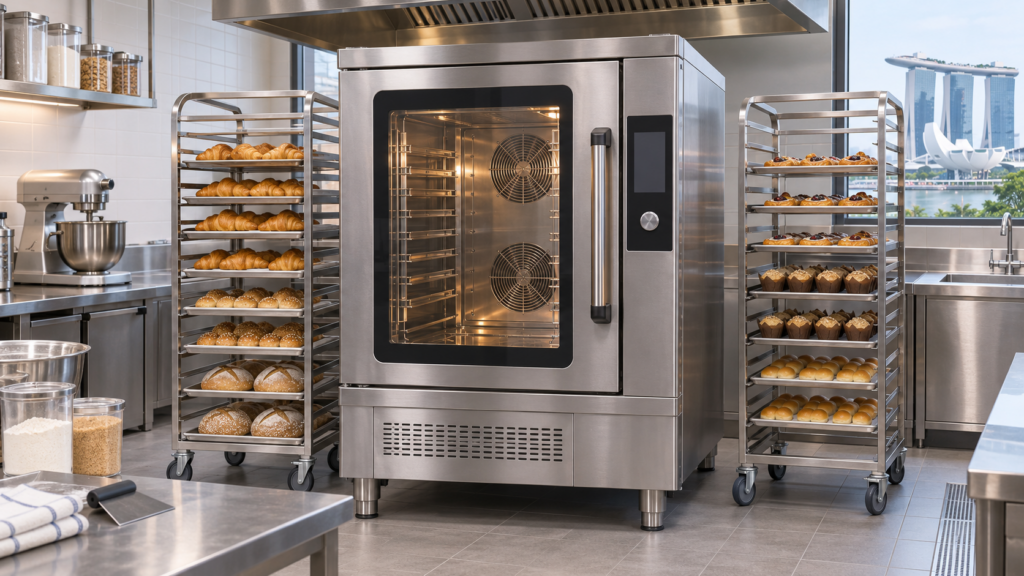
A cafe may need pastries ready for opening and savoury items ready for lunch while working with a single convection oven. A tray count tells you what might fit in one load. The purchase decision turns on whether each load can start and finish inside the service schedule, with enough time for the team to load, unload and use the next station. Build a timetable from two real service deadlines before asking for a larger oven or a second cavity.
Work back from when food must be ready
Name the two outputs you want to protect, such as morning display trays and a lunch delivery order. For each, identify the time it needs to reach the next station and the person waiting for it. Work backwards through any cooling, finishing, packing or movement time. Then record the latest acceptable unload time. If the two items reach the next station at once, check whether that station can handle both and whether the oven has to change its sequence.
Put each oven load on a timeline. Include loading, the production run, unload and any needed changeover before the next load. Use actual observations when available and distinguish them from estimates. Where you know only the bake time on a recipe sheet, leave the other segments open until the team measures them. That makes it clear where the margin in the timetable comes from.
Identify the time window the oven cannot share
For a conservative plan, assume each load occupies the whole cavity until a trial or applicable model documentation confirms a shared run is suitable. Confirm any shared-use plan with the applicable food handling procedures. If a sweet and a savoury load need incompatible settings or different handling conditions, leave them in separate blocks in the draft timetable. A spare shelf has value only when another approved load can actually use it at that time.
Trace the loading and unloading jobs
Look at the staff timetable next to the equipment timetable. The person assigned to unload may also be needed at the packing table. Decide who prepares the next group of trays while the current load is in the oven. Place a short buffer around the handoff where you have observed variation. Give the buffer a reason, such as one door reopening to correct a tray placement, rather than hiding time inside an assumed bake duration.
Use the same schedule to compare options
Send your timetable to the supplier and ask how the proposed configuration would handle the two deadlines. Compare three plausible arrangements if they are available for your site. The first keeps a single cavity and changes start times. The second increases the number of trays in an approved load. The third gives the team independently scheduled cavities. For each, note when product must be prepared, the movements between stations and any unresolved questions about footprint or installation.
Ask for the tray support drawing and relevant operating documentation for the exact configuration. Record the tray pattern proposed for the test and the actual position of each tray. Then have staff record output and timings from a representative sequence. A supplier demonstration is most informative when the same items, quantities and predefined acceptance criteria are used in every comparison.
Use a test that shows what the second load needs
Record when the first load leaves, what operators do next and when the second load is ready to go in. Ask whether any model-specific procedure or setting change applies. If the second load misses its latest unload time, move one constraint at a time in your plan. You can see whether the schedule improves with earlier prep, a better handoff, fewer changeovers or a different equipment configuration.
Frequently asked questions
How do I measure when the oven is free again?
Agree on the condition required before the next planned load goes in and use the relevant model instructions. Have staff log the unload and reload times and any hold between them. Record time that belongs to the oven separately from time lost waiting for trays or staff.
Should I buy a second oven when the timetable shows a clash?
Identify the reason for the clash before pricing the alternatives. If the loads require separate operating windows and neither can move, a configuration with independent cavities is worth asking about. If packing or staffing is the constraint, include that change in the comparison.
Can I estimate the timetable for a new outlet?
Use the opening menu, proposed quantities and planned staff roles. Mark the times as estimates and ask for a representative trial before you commit to a schedule-dependent configuration.
Request a comparison against your bake schedule
Review the U-Save convection ovens page and share your two-deadline production plan. Include tray types, batches, targeted unload times and the site footprint. Ask U-Save to identify the proposed configuration and the timings and constraints that still need confirmation.